E. L. RavenheartE. L. Ravenheart
  • Home
  • About
  • Books
  • Blog
  • Maps
  • Testimonials
  • Contact
  • Podcast
     
    E. L. RavenheartE. L. Ravenheart
      • Home
      • About
      • Books
      • Blog
      • Maps
      • Testimonials
      • Contact
      • Podcast

      Others Books by E. L. Ravenheart

      • Album
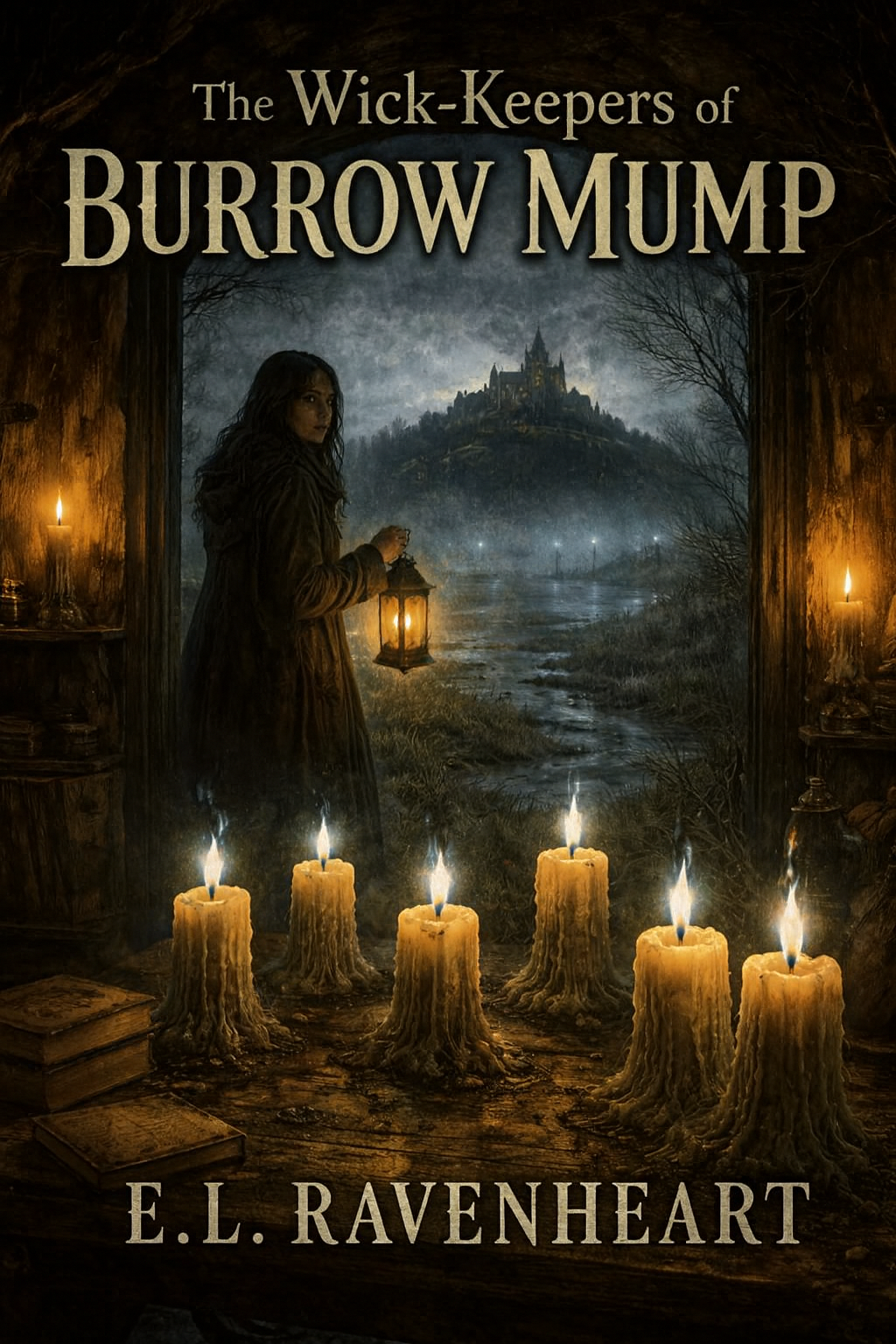
      Wick Keeper of Burrow Mump - The Wick-Keepers of Burrow Mump
The mist came up from the Levels like breath from a drowning man—thick, cold, and desperate. Sarah Blackwood watched it roll across the flooded fields from the window of the taxi, her fingers pressed white against her phone. No signal. There never was, this close to Burrow Mump.
"You'll be wanting the old Blackwood place, then?" the driver asked, his Somerset burr thick as the fog outside. He hadn't looked at her directly since she'd given him the address at Taunton station.
"Yes. My aunt's cottage."
"Ah." A single syllable, weighted with something Sarah couldn't name. "Didn't know old Meg had family still living."
"I didn't know her well," Sarah admitted. "My mother left Somerset when I was a baby. We never came back."
The driver made a sound that might have been understanding or might have been something else entirely. Through the windscreen, the conical hill of Burrow Mump rose from the marshland like a drowned cathedral's spire, the ruined church at its summit barely visible through the gathering dusk. Sarah had seen pictures, of course, but nothing had prepared her for the wrongness of it—the way it seemed to pull at her vision, drawing her eye even as her mind recoiled.
"Your mum had the right idea, leaving," the driver said quietly. "Some families, they're bound to this land. Bound proper. But some get free." He glanced at her in the rearview mirror, and his eyes were sad. "Shame you came back."
Before Sarah could respond, the taxi turned down a narrow lane barely wider than the car itself. Bare willows pressed close on either side, their branches scraping the windows like skeletal fingers. The cottage appeared suddenly, hunched and dark against the grey sky, its thatched roof sagging like the back of an old horse.
The driver wouldn't take her money. He simply shook his head, set her suitcase on the muddy path, and drove away faster than the narrow lane should have allowed. Sarah watched his taillights disappear into the mist, then turned to face her inheritance.
The cottage was older than she'd expected—far older than the Victorian era she'd assumed from the solicitor's vague descriptions. The walls were cob and stone, the windows small and deep-set like suspicious eyes. Above the door, carved into the lintel, was a symbol she didn't recognize: a circle with seven lines radiating outward, each line ending in a small cup or bowl.
The key was where the solicitor had said it would be, under a loose stone by the door. Inside, the cottage smelled of herbs and smoke and something else—something like standing water and old earth. Sarah fumbled for a light switch, found none, and had to use her phone's torch to locate the oil lamps.
In the flickering light, Aunt Meg's home revealed itself slowly. One main room served as kitchen, dining area, and sitting room, with a narrow staircase leading up to what must be a bedroom. But it was the walls that caught Sarah's attention. Every available surface was covered in drawings, diagrams, and what looked like maps. The Somerset Levels spread across one entire wall, marked with symbols and notations in a spidery hand. Burrow Mump sat at the center, and radiating out from it were seven lines, each ending at a point marked with the same cup symbol from the door lintel.
Sarah moved closer, her shadow dancing across the map. At each of the seven points, Aunt Meg had written names and dates. The Blackwood name appeared again and again, stretching back centuries. At the point closest to the cottage, she found her own family line: Margaret Blackwood, 1947-2024. Sarah Blackwood, 1989-
The dash after her birth year yawned like an open grave.
A sound outside made her spin around—a wet, dragging sound, like something heavy being pulled through mud. Sarah went to the window, cupping her hands against the glass to peer out into the darkness. The mist had thickened, pressing against the cottage like a living thing. And in that mist, lights were moving.
They bobbed and weaved across the flooded fields, pale blue and sickly green, dancing in patterns that hurt to watch. Will-o'-the-wisps. Corpse candles. Sarah had read about them, the folklore of the Somerset Levels, but seeing them was different. They moved with purpose, with intelligence, and they were coming closer.
She stepped back from the window, her heart hammering. On the table, she noticed for the first time, was a leather-bound journal. Her aunt's handwriting filled the pages, the entries growing more erratic toward the end.
January 3rd, 2024: The lights are restless tonight. The bargain holds, but barely. I am old, and the wick grows short. I have written to Sarah. She must know. She must choose.
January 15th: No response. Perhaps it's better. Let the line end with me. Let the darkness take what it will.
February 2nd: Candlemas. The most dangerous night. I have prepared the wicks, but my hands shake. How many years have I done this? How many years have the Blackwoods stood watch? Since the beginning. Since the first bargain. Since we learned what sleeps beneath the Mump.
February 28th: I am dying. I feel it in my bones, in the way the lights call to me. They know. They're waiting. Sarah, if you read this—run. Run as your mother did. Don't light the wicks. Don't keep the watch. Let it end.
The journal fell from Sarah's hands. Outside, the lights had reached the garden. They pressed against the windows, and in their glow, she could see shapes—human-shaped, but wrong, their limbs too long, their movements too fluid. Marsh spirits. The drowned dead of the Levels, drawn up from their watery graves.
A knock at the door. Three slow, deliberate strikes.
Sarah's breath caught in her throat. The knock came again, and with it, a voice—wet and hollow, like words spoken through water.
"Wick-keeper. The candles must be lit. The watch must be kept."
"I don't understand," Sarah whispered.
"Your blood knows. Your bones remember. Seven wicks for seven gates. Seven flames to hold back seven hungers. This is the Blackwood burden. This is the Blackwood gift."
Sarah's hands were shaking as she looked around the cottage. Now that she knew to look, she saw them—seven candles, each as thick as her wrist, placed at intervals around the room. They were made of something that wasn't quite wax, something that gleamed dully in the lamplight like rendered fat. And each one had a wick that looked disturbingly like braided hair.
"What happens if I don't light them?" she called out.
The silence that followed was worse than any answer. Then, slowly, the cottage began to shake. The mist outside thickened, darkened, and the will-o'-the-wisps flared brighter. In their light, Sarah saw what lay beyond them—a darkness so complete it seemed to devour the world, a void that pulsed with ancient hunger.
The voice came again, and this time it was many voices, speaking in unison. "The Mump is a barrow. A burial mound. But what was buried there was not dead. Only sleeping. Only waiting. Seven gates were made to hold it. Seven families were chosen to keep the watch. Six have failed. Six lines have ended. Only the Blackwoods remain."
Sarah ran to the map on the wall. Six of the seven points were marked with red X's, the dates recent—all within the last five years. Only the Blackwood point remained unmarked.
"What happens if all seven fail?" she asked, though she already knew the answer.
"It wakes. It rises. It feeds."
The cottage shook harder. Plaster cracked and fell from the ceiling. Through the windows, Sarah could see the darkness spreading, consuming the landscape. The flooded fields were disappearing into it, the distant lights of other homes winking out one by one.
She thought of her mother, who had fled Somerset and never spoken of it. Who had died young, of a cancer that ate her from the inside out. Had that been her punishment for abandoning the watch? Or her reward for escaping it?
Sarah's hands moved without conscious thought, reaching for the first candle. It was cold and slightly damp, and the wick felt wrong against her fingers—too soft, too much like real hair. She found matches on the mantle, struck one, and held it to the wick.
The flame that caught was not the warm orange of normal fire. It burned blue-white, cold and bright, and the moment it lit, Sarah felt something inside her chest respond—a pulling sensation, as if the flame were drawing on her own life force.
"Yes," the voices outside whispered. "Yes. The watch continues."
One by one, Sarah lit the seven candles. With each flame, the pulling sensation grew stronger, and she understood with horrible clarity what the candles were made of. Not wax. Not tallow. But something rendered from the Wick-keepers themselves. The fat and marrow of those who had kept the watch, rendered down and reformed, their hair braided into wicks. Aunt Meg's candle. Her grandmother's. Her great-grandmother's. All the way back to the first Blackwood who had made the bargain.
And when these candles burned down, when the wicks were consumed, new ones would need to be made.
The seventh flame caught, and the darkness outside recoiled. The cottage stopped shaking. The marsh spirits faded back into the mist. But Sarah could feel it now—the connection, the binding. She was tied to this place, to these candles, to the thing that slept beneath Burrow Mump. She could feel its dreams pressing against the gates, could sense its hunger, vast and patient and eternal.
The journal lay open on the floor where she'd dropped it. She picked it up with trembling hands and turned to the last entry.
March 1st: I am out of time. The candles burn low. I have perhaps a week, perhaps less. I have failed to prepare a successor. I have failed in my duty. But perhaps that is mercy. Perhaps it is better to let the darkness come than to condemn another generation to this half-life, this slow consumption. Sarah, my dear niece whom I never met—forgive me. I tried to spare you. I tried to let it end.
But the blood calls to blood. And if you have come, if you have read this, then you have already made your choice. The moment you crossed into the Levels, the moment you stepped through the door, you were bound. The only question now is whether you will keep the watch willingly, or whether you will be forced to it.
Know this: the candles must never go out. Not all seven at once. If they do, the gates will fail, and what lies beneath will rise. You must tend them, feed them, keep them burning. And when they burn low, when the wicks grow short, you must make new ones. The process is in the book on the shelf—the one bound in grey leather. I am sorry. I am so, so sorry.
But someone must keep the watch. Someone must be the Wick-keeper. And we Blackwoods have always paid our debts.
Sarah looked at the seven candles, burning with their cold, hungry light. Already, she could see that one was shorter than the others—Aunt Meg's candle, burning down to nothing. How long did she have? Months? Weeks?
She went to the shelf and found the grey leather book. Inside were instructions, written in the same spidery hand that covered the walls. Diagrams of the human body, showing which parts to harvest, how to render them down, how to braid the hair into wicks that would burn slow and cold. The process took months. It had to be done while the keeper was still alive, still tending the flames. A slow self-sacrifice, piece by piece, until there was nothing left but a new candle to add to the watch.
Sarah's phone buzzed—a single bar of signal, just enough for a message to come through. It was from her girlfriend, Emma. Hey babe, hope the cottage isn't too creepy! Call me when you can. Love you.
She looked at the message for a long time. Then she looked at the candles, at the map on the wall, at the darkness pressing against the windows. She thought about running, about fleeing as her mother had done. But she could feel the binding now, could feel the way it had sunk into her bones the moment she'd lit the first wick. If she ran, the candles would go out. The gates would fail. And the thing beneath the Mump would wake.
How many people lived in Somerset? Hundreds of thousands. How many in England? Millions. And if the darkness spread beyond the Levels, if it couldn't be contained...
Sarah deleted the message without responding. Then she turned off her phone and set it on the table. She would need to learn the watch, to understand the rhythms of the candles and the gates. She would need to prepare herself for what came next—for the slow rendering, the gradual transformation from keeper to kept, from guardian to fuel.
Outside, the mist began to thin. Dawn was coming, pale and grey over the flooded fields. The will-o'-the-wisps faded with the darkness, and the marsh spirits retreated to their watery graves. But Sarah could still feel them, waiting. Watching. Patient as the thing beneath the Mump was patient.
She went to the window and looked out at Burrow Mump, rising from the marshland like a warning. The ruined church at its summit caught the first light of dawn, and for just a moment, Sarah thought she saw something moving in the shadows beneath it—something vast and ancient, stirring in its sleep.
The candles flickered behind her, their cold light reflecting in the window glass. Seven flames. Seven gates. One keeper.
Sarah Blackwood, last of her line, turned away from the window and began to read the grey leather book. She had a watch to keep. She had a debt to pay. And when her candle burned low, when her wick grew short, there would be no one to take her place.
But that was a problem for another day. For now, the flames burned. The gates held. And the darkness, for one more night, remained at bay.
In the grey leather book, on the very last page, she found a final note in Aunt Meg's handwriting:
The bargain was made in blood and bone, in the old days when the Romans came and disturbed what should have remained sleeping. Seven families bound themselves to keep the watch, to hold the gates, to burn themselves down to nothing so that others might live in ignorance and safety. It is not fair. It is not just. But it is necessary.
You will hate me for this, Sarah. You will hate your mother for running, and you will hate yourself for staying. But know this: every day the candles burn, every night the gates hold, you save countless lives. You are a hero that no one will ever know. A martyr to a cause that must remain secret.
The Wick-keepers of Burrow Mump are the last line of defense against an evil older than history. And you, my dear, are the last Wick-keeper.
May your flame burn long. May your sacrifice be remembered, even if only by the darkness you hold at bay.
Welcome home.
Sarah closed the book and looked at the seven candles. Aunt Meg's was already noticeably shorter, its flame guttering. She had perhaps a month before it went out entirely. A month to learn how to make a new one. A month to come to terms with what she had become.
Outside, the Somerset Levels stretched away into the morning mist, beautiful and terrible and hungry. And beneath Burrow Mump, something ancient dreamed of waking, held back only by seven cold flames and the slow sacrifice of a woman who had come home to die.
The watch continued. The watch would always continue. Until the last Blackwood burned down to nothing, and the darkness, at last, was free.
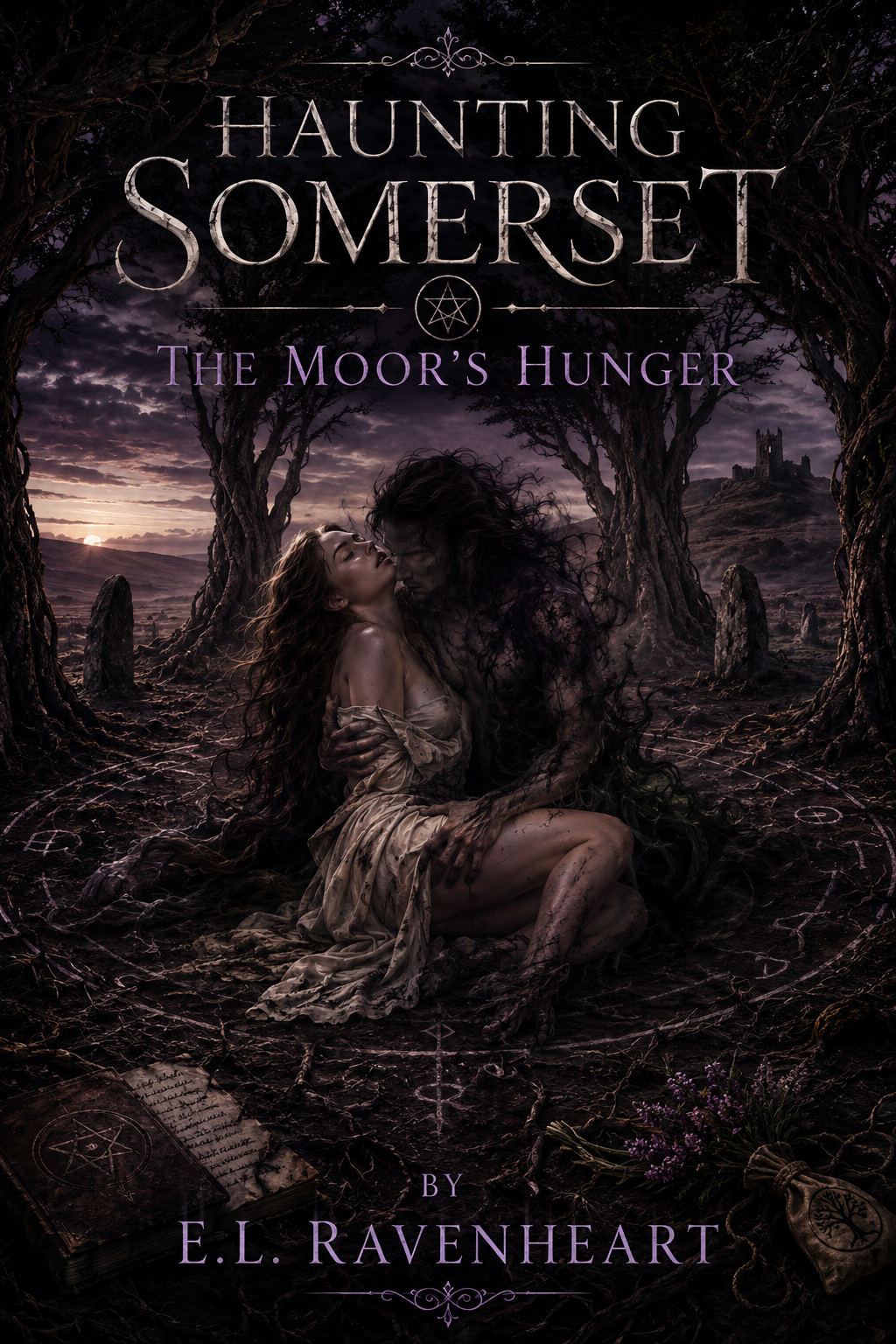
      Haunting Somerset: The Moor's Hunger - Haunting Somerset: The Moor’s Hunger
By E.L. Ravenheart
Haunting Somerset: The Moor's Hunger
by E.L. Ravenheart
The moors called to Elspeth in a language older than words—a thrumming beneath her ribs that pulled her across counties to where the earth breathed into gathering dark.
The yew trees watched her arrival.
She felt their attention like pressure against her skin, those gnarled sentinels twisted into shapes that suggested reaching, grasping, knowing. Their roots went down into places where light had never touched, where the old magic pooled thick as blood. Her grandmother's journals had spoken of this place in fevered script: The moors remember. The moors hunger. Our blood answers.
Elspeth's blood answered now.
The ground felt soft, yielding. Heat bloomed low in her belly—anticipation sharp as broken glass.
She walked toward the yew grove where ancient yew formed a perfect circle. The air grew thick, alive with watching. Mist curled around her ankles like fingers, and she knew—knew—she was not alone.
"You came."
The voice emerged from everywhere and nowhere. Not quite masculine, not quite human. It resonated in her bones.
"I was called," Elspeth whispered.
"You were claimed."
The Keeper manifested at the threshold between worlds—half-shadow, half-flesh, beautiful in the way dangerous things are beautiful. Eyes like winter earth. Hands that flickered between solid and smoke. The magic that bound him to this place radiated from his form in waves that made her skin prickle with recognition.
"I know you," she breathed.
"You've always known me." He moved closer, and reality bent around him. "Your bloodline has fed this earth for generations. Witchcraft runs in your veins. Did you think I wouldn't feel you the moment you crossed onto my moors?"
His hunger was palpable—centuries of it, focused entirely on her. She was mortal, vulnerable, his. But the magic in her blood made her precious, made her necessary, and that gave her a different kind of power entirely.
"What do you want from me?" But she already knew.
"Everything."
The earth opened beneath them.
Not a fall but a pull—the Keeper drawing her down into the liminal spaces where he existed most fully. Soil became silk against her skin, roots parted like curtains, and the beneath-magic rose to meet them in waves of ancient hunger.
Here, in the spaces between earth and air, the Keeper became more. His form solidified, pressed against her in the soft loam. The magic flowed through them both—through her blood, through his essence—binding them together with threads older than language.
"You feel it," he murmured against her throat. His mouth traced the pulse there, tasting the witchcraft that sang in her veins. "The moors have been waiting for you. I have been waiting."
The magic responded to her desire, amplifying it until she couldn't tell where her need ended and the earth's began.
"Please," she whispered.
"I know what you need." His hands—solid now, warm—mapped her body with reverent hunger. "You were reaching for this. For me."
He kissed her, and it was like drinking starlight and soil. The magic surged between them, rewriting the boundaries of flesh and spirit. When his fingers found the hem of her dress, the fabric dissolved like mist. The earth beneath her back was impossibly soft, alive with ancient awareness.
"The moors claim you," he breathed against her skin, trailing kisses down her throat. "And I claim you. Body and blood and bone."
His need for her was absolute, felt in every tremor of his hands.
Elspeth arched into him as his mouth found her breast, as his hands traced patterns of old magic across her thighs. The witchcraft in her blood rose to meet his touch, and she understood—this fierce, consuming union between flesh and earth and power.
When he finally moved over her, into her, the magic exploded through them both. The earth itself pulsed with their rhythm, roots and soil and ancient yew trees all resonating with their joining. Elspeth cried out as pleasure and power merged into something transcendent.
The Keeper moved with centuries of longing, each thrust deliberate and devastating. His eyes never left hers—winter earth meeting summer storm—and she saw in them an obsession that should have frightened her but instead made her feel seen for the first time in her life.
"Mine," he growled against her mouth. "Say it."
"Yours," she gasped, and the word was a binding. The magic sealed around them, through them, marking her in ways that went deeper than skin.
They moved together until the boundaries dissolved completely—mortal and spirit, earth and flesh, hunger and satisfaction all bleeding into one. When release came, it shattered through them both like lightning through stone, and Elspeth felt the moors themselves shudder in response.
She surfaced slowly, awareness returning in fragments. The Keeper held her in the soft darkness, his form still solid, still warm. The magic hummed contentedly around them.
"You cannot leave now," he murmured. "The binding is complete."
She felt it in her bones, in her blood—the moors had claimed her as thoroughly as he had.
________________________________________
Dawn found her in the yew grove, dress torn and muddy, body aching. The Keeper was gone, returned to his liminal spaces, but his presence saturated everything. She could feel him in the earth beneath her, in the mist that clung to her skin, in the pulse of magic that now beat in time with her heart.
She tried to stand, to leave, but her legs wouldn't carry her away. The magic held her—not painful, but absolute.
The yew trees whispered in the morning wind: You are ours now. You are his.
Elspeth sank back to the ground, and found she didn't want to fight it. The emptiness she'd carried all her life was gone, filled now with dark earth and darker magic and the Keeper's obsessive hunger. She was marked, claimed, bound.
She was finally home.
The moors stretched around her, brooding and beautiful, and somewhere beneath the earth, she felt him waiting. Always waiting. Always hungry.
Always hers, as she was his.
Forever.
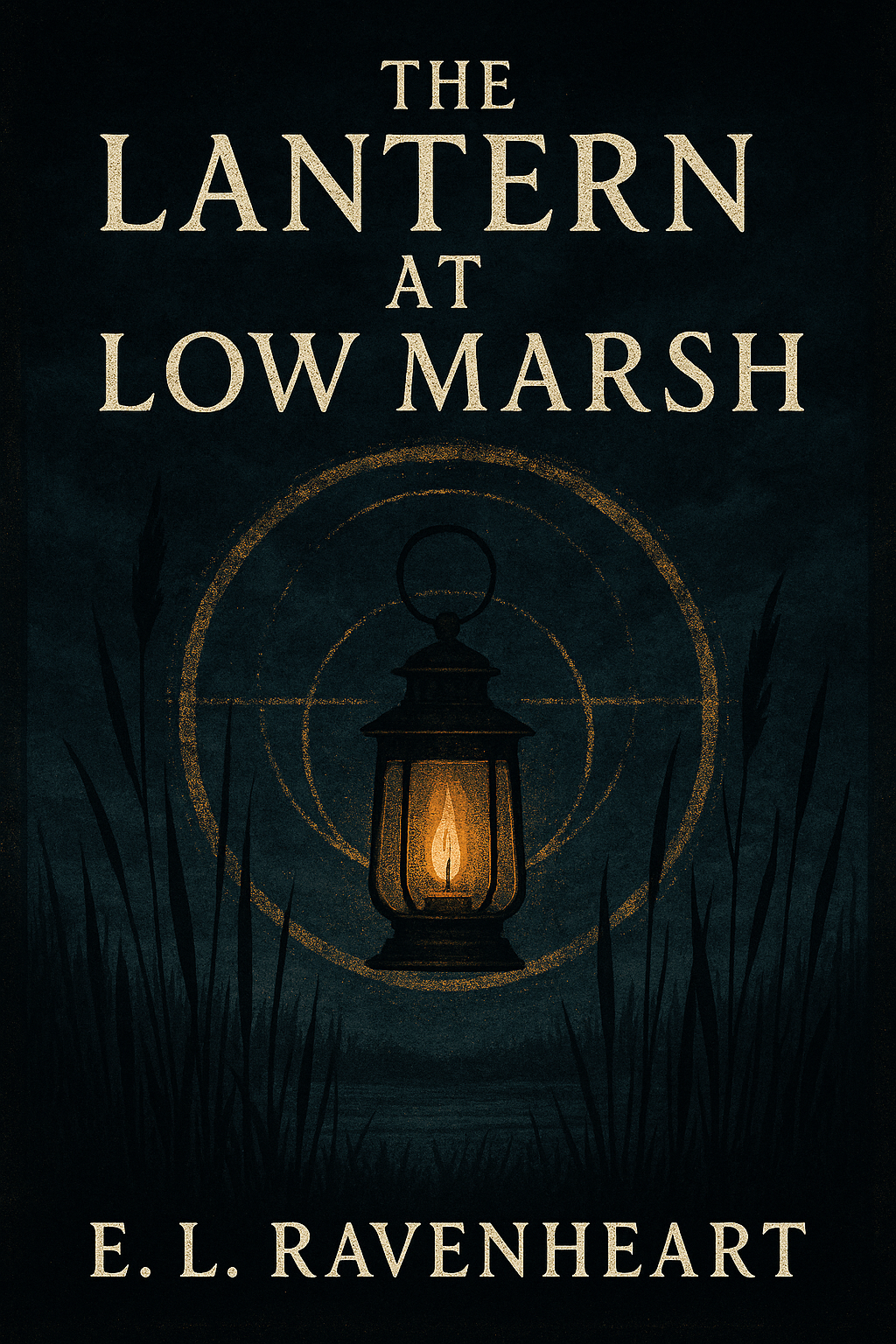
      The Lantern at the Low Moor - The Lantern of the low moors
The Somerset moors had been shrinking for years, but nobody in Witham Grange talked about it. Everyone in the town just looked the other way when the reeds changed colours to yellow sooner than the season indicated, or even when the water line pulled back in that strange, perfect circle. As if something underneath had taken one long careful breath. The older folks would mutter that the land was remembering itself. The children never spoke of it as if it was a bogeyman to get children to behave. Only Mara Thornbridge kept watch. She lived by herself in the last cottage before her marsh path turned to mud and whispering grass. Her Mother and grandmother had done the same before her, although no one had explained what they were watching for. Assuming all is explained eventually. All they were ever told is when the Lanterns come calling, you need to be here to answer. Mara has never seen any lanterns, and she has been watching for the last 13 years and no sign of anything. Recalling her mother telling her that once the lanterns come to you, they will come often. She was starting to dispute they were a real thing, but she felt something from the Moors watching her back every evening especially when the moon shimmer was there. The strongest is just after dusk when the sky went purple and the water went still as if the moors were holding its breath. At nighttime you should hear starlings’ wings beats like a thundering waterfall. Bittern booming call that can carry for miles across the reed beds, the screeching calls of the Tawny owls, whirring or churring sound of the Nightjar. Tonight, everything changed, it was deadly silent, not a sound as if the moors were holding its breath waiting on me to enter. This was when she saw a tiny point of light way out in the deepest part of the moors. Mara rubbed her eyes assuming hallucinating and strained to see with fresh eyes. Now the pale light has flickered again, now holding a steady unwavering glow. The lantern she thought, could it be here now. Her breath caught in her throat, picturing this moment a thousand of times, here it finally is and it is all happening as her mother had told in bedtime stories. She feels that she had been preparing for this moment since a child, since her mother and grandmother told her that this is duty from birth. She eased off her front porch, and the moors opened a path for her. The lantern did not move closer as she was stepping closer the path opened for her. It had only seemed to hover above the water, suspended in a patch of fog that was not there until just then as she looks up for the light after ensuring her footing was safe as each step her boots were sinking into the mud. When she arrived at the old causeway stones, partially submerged in the muddy earth and slightly slippery, sharp jagged that make it difficult to manoeuvre. Now looking back up and the lantern was a bright glowing amber; the fog has now pulled as if my vision had been blurred and now picture perfectly clear. The circle has now appeared, a perfect ring of water, darker than anything around it as if the night needed to make the circle known. This is where the lantern is hovering right in the middle of this circle as if the artist painted the circle themselves. The lantern floated above the circle not attached to anything. The air above it shimmered as heat off hot summer pavement. Mara's heart is racing, excited and terrified at the same instance. In that moment recalling her grandmothers voice "the circle is a threshold, the lantern is a key and the price is always yours to pay." She never understood what her grandmother mean by it all. Now she realises that it is her time to find out what it all meant. She could make out a ripple moving across the water, as if something is just below the surface to make the impression in the water. Mara has felt paralysed in place so still her breath had frozen too. Just then a faint voice so imperceptible, not spoken, more like she could feel the voice. The voice stating, "come into the circle." She could feel her knees weakening as if they were about to give out. She could feel the words move through her bones, ancient and hungry. She stumbled backwards trying to recover her footing remembering the sinking earth and stone, but everything behind her had changed the path, muddy earth and stone were all one and nothing but her reeds that had moved for her to reveal the path is now supporting her back to stay in the circle. The circle was the only way forward. The lantern highlighted the way; Mara stepped on the first stone just above the water. The very second each step she took she could feel it all shifting. The moors dissolved into the mist, the air got thicker and heavy, stifling, making nearly impossible to breathe. The heavy smell of peat and something much older, something of memory. She is finding herself standing on a narrow strip of earth that had no existed even seconds before. It stretched towards the lantern like a tongue of earth reaching into nothing. She progressed forward on as she cannot turn back now even as she had wanted to return to her front porch. The fog parted around her, showing her pieces of the moors as it used to be centuries ago: deeper, wilder, alive with strange lights darting across the reeds. Multiple shadows are now moving under the water, to fluid to be human and too purposeful to be an animal. She felt with encouragements that this was not a vision or memory or fables once told. Something familiar encouraged her that she was in fact seeing through time. This area of the Somerset moors was presenting their memory through her. A figure appeared ahead of her, tall wearing a cloak, carrying the lantern. Mara breath caught in her throats; I know that posture. She could not see the face, but the posture was weary, burdened and resigned. She bellowed out "Mother?" Mara is stumbling forward calling out again "Mother?" The figure never turned around nor utter a word, only progressing to the centre of the circle, knelt lowering he lantern into the water. The amber glow dimmed and was swallowed up in the darkness. The figure dissolved into the mist that drifted about the water. Mara fell to her knees. Mara's mother has vanished when Mara was thirteen, everyone assumed that she had drowned in the moors, now Mara understood the moors has taken her, she would never have left, she had been taken or had she given herself to the circle? Her mind was racing with possibilities that would help explain this all. The lantern levitates from the water brighter that before. The voice shifted firmly through her bones saying "Come." She felt in her bones that the pressure so intense could snap her bones, the voice is growing impatient. Mara stood up an began to head to the circle and stepped in. The water was not cold, it was soothing warm water, far too warm for the season as if it was blood or breath. It now clung to her skin, thick and sticky, beginning to pull her closer with each step. The lantern was floating ahead and always just out of reach. The voice whispering through her skull, this time curling around her mind like smoke. You are the last, the circle must be kept, the moors must be fed. Mara gritting her teeth, "fed with what" Mara struggling to state. The voice replied with "memory, we need your memory." The water surge dragging her under, she fought back by kicking upwards, but the moors were holding her tight with root limbs twining themselves around her limbs with the yew tree roots limbs. Images flashing behind her eyes, her childhood, her mother’s laughter, the cottage at dawn, the smell of peat smoke, the touch of her grandmother plaiting her hair. each memory gets pulled as i was burned from her memory, leaving a hollow ache. "No!" she gasped, you cannot have them, as she began to thrash around to prevent or to break loose. She could hear the voices "The moors will remember what you forget." She could feel the limbs tightening against her ankles, panic shot through her. She began to claw her way upwards, breaking the surface with a ragged gasp. Now the lantern has lingered just inches from her face, close enough now could reach if I can get my arms free. Behind the lantern rising from the circle she could see something behind it, it was the keeper of the lantern and the circle. Not like any human she had ever seen, potentially was once a human once upon a time, centuries have reshaped it. The body was tall and reed than, the colour of we stone, moss grew along its arms, water dripping from its hair which hung long, tangled strands like river weeds. Its eyes were hallowing pits filled with shifting lights. The lantern held high dangling from his hand. Mara stated, trembling, "What are you?". Its voice was the marsh itself, wind, water, mud and memory. "I am the keeper, the circle binds me, the lantern sustains me, the moors endure because I endure." She swallows hard, "Why did you take my mother?" The Keeper stated, "she came willingly, just as her mother before her did, just as you must come now." Mara shook her head "no! will not come." The Keeper tilting his head as if studying her confused, "But, you already have." The circle tightened around them, the water roe, swirling with fragments of memory: faces, voices, moments torn from her mind. She saw her mother again, kneeling in the circle lantern in hand. Her mothers voice echoed faintly "When the lantern calls you answer." Mara clenching her fists "Why us, why my family?" The keeper lifted the lantern, it glowed, dimmed, revealing a second light deep in the keeper’s chest, a faint, flickering ember. "Because you remember the moors and the moors remember you." The water surge again, pulling at her thoughts, her identity, her very self, Mara screamed. She did not know how long she had fought, time mean nothing in the circle. The moors pulled at her memories, but she continued to hold them with a ferocity she did not now she had in her. Then her mother face, the cottage, the reeds, the sky over Witham Grange at dusk, she refused to allow the moors to take them from her. The keeper watched, lantern dimming, "you resist?" Mara spat water at him "I choose." The keepers hallow eyes flickered, "Choice is a human word and has no meaning here." "Then you better learn it," Mara protested. The moors began to shudder, the circle rippled violently, lie the land itself recoiled. The keeper stepped back, lantern trembling in its grasp..."It you do not take the lantern the circle will break." "Good, if he circles breaks the moors will die", Mara hesitated. She looked around, the moors, its memories, its ghosts, its ancient breath was woven into every fabric of her life into her family and into the grange itself. If it was to die something irreplaceable would die right along with it. On the other hand, if she took the lantern and ensured he circle to continue she would become the keeper, she would lose herself, unless a thought sparked. "What if we no longer required a keeper but instead offered a witness? The keeper went silent, "Explain." Mara stepped forward, water swirling around her waist, " You take memories to survive, but memories fade, they weaken and break." "What if the Moors no longer needed to steal them," "What if someone remembered for it?" The keepers light flickered uncertainty, A witness? "Yes, a witness," Mara clarified. A mortal cannot hold the moors memory, "maybe not alone," she reached for the lantern, the keeper recoiled but it was fa too late. Mara's hand closed around he handles, just then a light exploded in a flash. Then when the light had dimmed the world as she had known it has now been restored, mara was no standing on solid ground, the circle was gone. The Grange stretched out before her, vast and shimmering, alive with whispering reeds and darting lights. The water began glowing faintly, as if it was lit from within. the keeper was no longer anywhere to be seen, the lantern hung from her hand warm and pulsing like a heartbeat that she has known, her own. Inside her mind woven through her thoughts like roots through soil was the moors memory, not stolen, not taken by force, but now shared. She felt her mother there, faintly but present. Her grandmother shaped from the mist too and followed in the mist were the images of all the Thornbridge women from generations, each holding a piece of the moors story. Mara breathed deeply, the grange breathed with her. She understood now that the circle was never meant to be a prison, it had been a pact, a bond between land and lineage. By the old, flawed way demanding sacrifice versus partnership. She has now changed that entire pact, she would be the first witness, the lantern brightened, casting a warm glow across the reeds. Mara turned towards home, the grange whispered behind her, not a command, but a promise. "We will remember." When Mara reached her cottage, dawn was now breaking. The sky went over all pink in the Witham Grange, and the birds started singing again. She felt the moor's memory humming beneath her skin, vast and ancient, but not heavy anymore. She sat the lantern on her windowsill, it glowed softened, settling into a steady, gentle pulse. Mara went to make some tea, hands steady, heart calm, she felt differently. Somehow older, younger, deeper and lighter all at once. The circle presence was a quiet companion now and not a burden. As she begins to relax sitting and sipping her tea there was a knock on the door. She opens the door to find a girl about ten at the door, barefoot, hair tangled, eyes wide with fear. "Mara Thornbridge," the little girl questioned. "Yes," mara replied. The girl pointed to the moors, "I saw the light, a lantern, I think it was calling me." Mara knelt to look in the little girls’ eyes as she held her hands for reassurance, " it will no longer call for you anymore, it calls with you," she said gently. The girl frowned with confusion, "I do not understand". Mara assured she would understand one day. She invited the girl inside, poured her a tea and begin talking, not about a sacrifice, but about a memory, not about fear, but about witness. The circle was no longer a trap and is now a bond we share. The girl listened, eyes wide with optimism and hope. Outside the moors shimmered, alive, awake, remembered Years passed by and all the people in the village have grown to understand that Mara is the Lantern witness, although she never called herself that. She had taught other people to listen to the moors, to honour its memory without giving up on their own. The lantern stayed on her windowsill, glowing softly, a reminder of the night the circle changed. The Grange flourished, the water deepened, the reeds grew tall, the Grange lights came back at night to dance in the dusk night sky just above the moors, the land has healed and Mara healed with it. Sometimes, when the fog rolled in just right, she could feel her mother's presence warm, proud, no longer trapped in the circles grasp. The moors held her memory gently now, not as a keeper but as a companion. One night many years later, Mara walked to the edge of the moors to where the lantern had glowed so bright in her hands, brighter than it had that fateful night. "Are you ready," the circle questioned. "Yes, I am ready." She stepped into the water, not to be taken, not to be consumed but to join. The moors embraced her, warm and welcoming. When she dissolved into the light, her memories flowed into the water, not stolen but freely given. The lantern rose, brighter than ever, a new witness would come. The Circle of Witham Grange moors would endure.
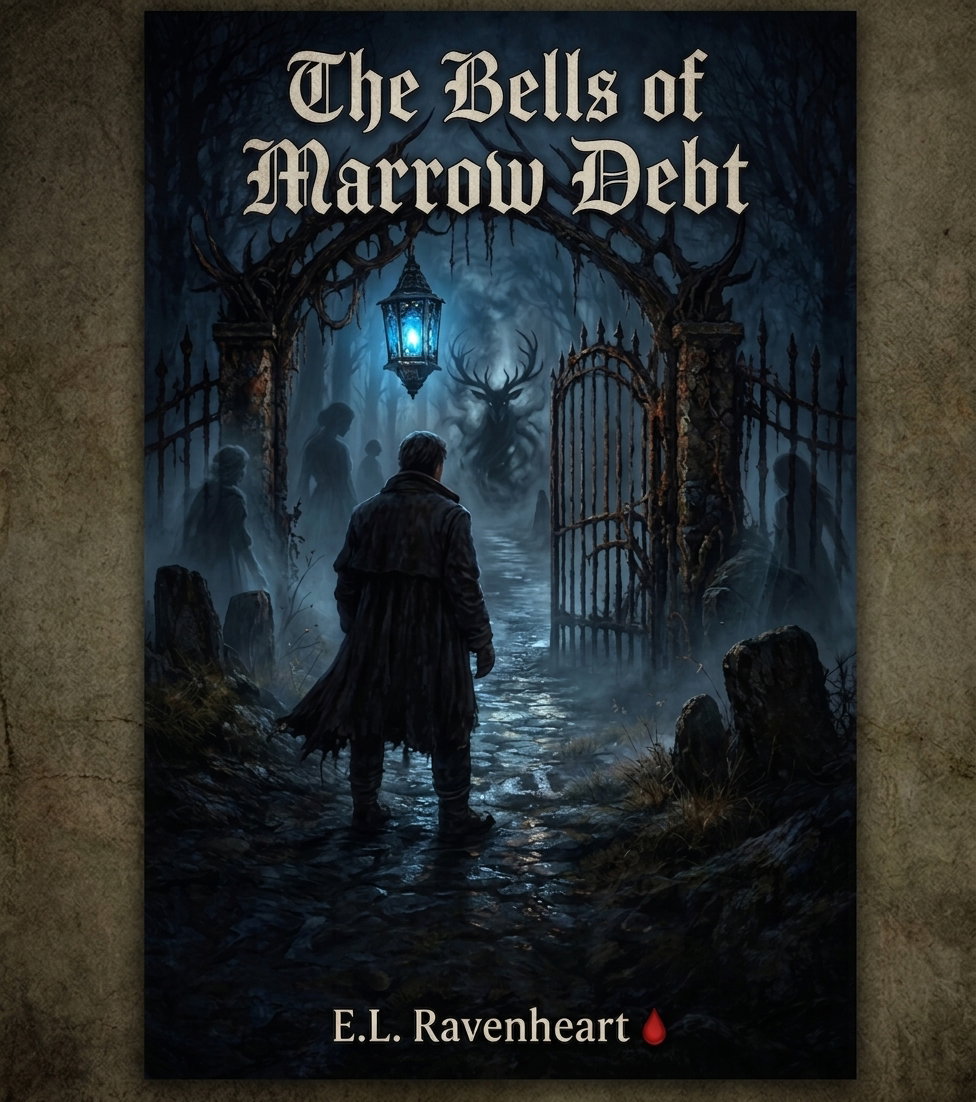
      The Bells of Marrow Debt - The Bells of Marrow Debt


When the old year loosened its grip, the village bells rang without hands.

They rang at dusk, deep and bruised, their sound crawling through the hollows. The tone was wrong—too low, too deliberate. Dogs went silent.

Everyone paused. Shutters closed. Candles were snuffed until the village dimmed to near-darkness. We had been taught since childhood that bells rang only for three things: weddings, funerals, and debts coming due.

And we all knew there were no weddings planned. No one had died.

I followed the path past the yew trees, past the stones etched with names the river had already half-erased. Each step pressed something upward—memories, voices, the ache of old bargains sealed with blood instead of ink.

My grandmother used to say the dead never leave; they simply learn patience. I was seven when she first told me about the debt—that our family had made a promise sealed with marrow and breath. When the bells rang without hands, the eldest living child would come, would cross, would pay what was owed. With her last breath, she'd whispered: "When the bells ring, don't run. Running only makes it angry."

Now, walking this path with the bells still echoing in my bones, I understood what she'd meant.

At the edge of the wood, the gate stood there.

It had not been there the day before. Ironwork twisted like antlers, like ribs bent backward, slick with rust that looked too fresh to be rust at all. The metal was warm, pulsing faintly as though something beneath it still had a heartbeat.

Hanging from it was a lantern I had buried three winters ago.

I'd buried it after my grandmother's funeral, along with her things. The lantern had been hers, passed down through the women of our family. Now it hung from the impossible gate, its glass cracked in the exact pattern of the scar across my palm. Its flame burned blue, cold and familiar.

Every instinct screamed at me to turn back, to run, to pretend I'd never seen this place.

But I knew better. I'd always known better.

"You're late," said the voice behind me.

I did not turn. I did not need to. I knew that voice from lullabies and warnings whispered into my ear when I was too young to understand them. Known. Patient. Owed.

"I closed the door," I said, my voice barely above a whisper. "I finished it."

A soft, indulgent sound—almost laughter, but not quite. Something colder.

"Finished?" it said, amusement curling through the word like smoke. "You cannot finish what was never yours to end. Endings are only pauses we allow you."

Silence stretched between us, thick and expectant.

"The path chose you before your first cry. Before your mother's. Before hers. The moment your great-great-grandmother spoke the words and opened her veins to seal them, every daughter after was already walking toward this gate. You've been coming here your whole life."

My hands clenched at my sides. "Then why wait? If I was always meant to come, why the bells? Why the ceremony of it?"

Because the willing taste sweeter. Choice made with open eyes—true choice—has power stolen things never will.

"I could still refuse," I said, though we both knew it was a lie.

"Could you? Knowing what refusal would cost? Your village. Your bloodline. Every child born with your family's name, marked and hunted until the debt is paid in screaming instead of silence. The only choice you have is how you cross. Fighting or willing. Screaming or silent."

The lantern swung, though there was no wind. The gate opened without a touch, hinges groaning like something waking from a long, hungry sleep. Beyond it lay the road I had walked my entire life, except wrong—longer, darker, lined with footprints that matched my own, leading inward instead of out.

The bells rang again. Closer now. Expectant. Demanding.

I stepped forward, because the path had always known my name, and because some promises are older than fear.

The cold wrapped around me like recognition, like coming home to a place I'd never been but had always known. Each step was easier than the last.

My shadow stretched ahead, longer than it should have been, and when I glanced down, I saw it was not alone. Other shadows walked beside mine—women's shapes, familiar and strange all at once. My grandmother. My mother. All the daughters who had walked this path before me, waiting to welcome me home.

The crossing was like stepping through a membrane that gave way with a wet, tearing sound. For a moment, I was nowhere—suspended between heartbeats. I could see the village fading behind me; the road ahead, stretching into darkness; and standing at the end of it, the thing that had been waiting.

It had no single shape. It was antlers and smoke and the space between stars. It was the voice, the bells, the promise sealed in blood and marrow generations ago. I finally understood what my grandmother had meant.

This wasn't death. This wasn't ending.

This was transformation. This was becoming. This was the price and the prize all at once.

Behind me, the village exhaled, released from a tension it had held for generations. The bells fell silent. Candles were relit. Life would go on, protected and prosperous, bought with my willing steps.

Ahead, something waited—certain I would come.

And I did.

The last thing I heard was my own voice, though I wasn't sure if I was speaking or if the words were simply true: "I am the bridge. I am the door. I am the willing gift, freely given."

And then I was through, and there was no more village, no more gate, no more bells.

Only the road ahead, and the patient thing that walked beside me now, no longer waiting.

Only the knowledge that I had paid what was owed, and that the debt, at last, was satisfied.

— *E.L. Ravenheart* 🩸

      Wick Keeper of Burrow Mump - The Wick-Keepers of Burrow Mump
The mist came up from the Levels like breath from a drowning man—thick, cold, and desperate. Sarah Blackwood watched it roll across the flooded fields from the window of the taxi, her fingers pressed white against her phone. No signal. There never was, this close to Burrow Mump.
"You'll be wanting the old Blackwood place, then?" the driver asked, his Somerset burr thick as the fog outside. He hadn't looked at her directly since she'd given him the address at Taunton station.
"Yes. My aunt's cottage."
"Ah." A single syllable, weighted with something Sarah couldn't name. "Didn't know old Meg had family still living."
"I didn't know her well," Sarah admitted. "My mother left Somerset when I was a baby. We never came back."
The driver made a sound that might have been understanding or might have been something else entirely. Through the windscreen, the conical hill of Burrow Mump rose from the marshland like a drowned cathedral's spire, the ruined church at its summit barely visible through the gathering dusk. Sarah had seen pictures, of course, but nothing had prepared her for the wrongness of it—the way it seemed to pull at her vision, drawing her eye even as her mind recoiled.
"Your mum had the right idea, leaving," the driver said quietly. "Some families, they're bound to this land. Bound proper. But some get free." He glanced at her in the rearview mirror, and his eyes were sad. "Shame you came back."
Before Sarah could respond, the taxi turned down a narrow lane barely wider than the car itself. Bare willows pressed close on either side, their branches scraping the windows like skeletal fingers. The cottage appeared suddenly, hunched and dark against the grey sky, its thatched roof sagging like the back of an old horse.
The driver wouldn't take her money. He simply shook his head, set her suitcase on the muddy path, and drove away faster than the narrow lane should have allowed. Sarah watched his taillights disappear into the mist, then turned to face her inheritance.
The cottage was older than she'd expected—far older than the Victorian era she'd assumed from the solicitor's vague descriptions. The walls were cob and stone, the windows small and deep-set like suspicious eyes. Above the door, carved into the lintel, was a symbol she didn't recognize: a circle with seven lines radiating outward, each line ending in a small cup or bowl.
The key was where the solicitor had said it would be, under a loose stone by the door. Inside, the cottage smelled of herbs and smoke and something else—something like standing water and old earth. Sarah fumbled for a light switch, found none, and had to use her phone's torch to locate the oil lamps.
In the flickering light, Aunt Meg's home revealed itself slowly. One main room served as kitchen, dining area, and sitting room, with a narrow staircase leading up to what must be a bedroom. But it was the walls that caught Sarah's attention. Every available surface was covered in drawings, diagrams, and what looked like maps. The Somerset Levels spread across one entire wall, marked with symbols and notations in a spidery hand. Burrow Mump sat at the center, and radiating out from it were seven lines, each ending at a point marked with the same cup symbol from the door lintel.
Sarah moved closer, her shadow dancing across the map. At each of the seven points, Aunt Meg had written names and dates. The Blackwood name appeared again and again, stretching back centuries. At the point closest to the cottage, she found her own family line: Margaret Blackwood, 1947-2024. Sarah Blackwood, 1989-
The dash after her birth year yawned like an open grave.
A sound outside made her spin around—a wet, dragging sound, like something heavy being pulled through mud. Sarah went to the window, cupping her hands against the glass to peer out into the darkness. The mist had thickened, pressing against the cottage like a living thing. And in that mist, lights were moving.
They bobbed and weaved across the flooded fields, pale blue and sickly green, dancing in patterns that hurt to watch. Will-o'-the-wisps. Corpse candles. Sarah had read about them, the folklore of the Somerset Levels, but seeing them was different. They moved with purpose, with intelligence, and they were coming closer.
She stepped back from the window, her heart hammering. On the table, she noticed for the first time, was a leather-bound journal. Her aunt's handwriting filled the pages, the entries growing more erratic toward the end.
January 3rd, 2024: The lights are restless tonight. The bargain holds, but barely. I am old, and the wick grows short. I have written to Sarah. She must know. She must choose.
January 15th: No response. Perhaps it's better. Let the line end with me. Let the darkness take what it will.
February 2nd: Candlemas. The most dangerous night. I have prepared the wicks, but my hands shake. How many years have I done this? How many years have the Blackwoods stood watch? Since the beginning. Since the first bargain. Since we learned what sleeps beneath the Mump.
February 28th: I am dying. I feel it in my bones, in the way the lights call to me. They know. They're waiting. Sarah, if you read this—run. Run as your mother did. Don't light the wicks. Don't keep the watch. Let it end.
The journal fell from Sarah's hands. Outside, the lights had reached the garden. They pressed against the windows, and in their glow, she could see shapes—human-shaped, but wrong, their limbs too long, their movements too fluid. Marsh spirits. The drowned dead of the Levels, drawn up from their watery graves.
A knock at the door. Three slow, deliberate strikes.
Sarah's breath caught in her throat. The knock came again, and with it, a voice—wet and hollow, like words spoken through water.
"Wick-keeper. The candles must be lit. The watch must be kept."
"I don't understand," Sarah whispered.
"Your blood knows. Your bones remember. Seven wicks for seven gates. Seven flames to hold back seven hungers. This is the Blackwood burden. This is the Blackwood gift."
Sarah's hands were shaking as she looked around the cottage. Now that she knew to look, she saw them—seven candles, each as thick as her wrist, placed at intervals around the room. They were made of something that wasn't quite wax, something that gleamed dully in the lamplight like rendered fat. And each one had a wick that looked disturbingly like braided hair.
"What happens if I don't light them?" she called out.
The silence that followed was worse than any answer. Then, slowly, the cottage began to shake. The mist outside thickened, darkened, and the will-o'-the-wisps flared brighter. In their light, Sarah saw what lay beyond them—a darkness so complete it seemed to devour the world, a void that pulsed with ancient hunger.
The voice came again, and this time it was many voices, speaking in unison. "The Mump is a barrow. A burial mound. But what was buried there was not dead. Only sleeping. Only waiting. Seven gates were made to hold it. Seven families were chosen to keep the watch. Six have failed. Six lines have ended. Only the Blackwoods remain."
Sarah ran to the map on the wall. Six of the seven points were marked with red X's, the dates recent—all within the last five years. Only the Blackwood point remained unmarked.
"What happens if all seven fail?" she asked, though she already knew the answer.
"It wakes. It rises. It feeds."
The cottage shook harder. Plaster cracked and fell from the ceiling. Through the windows, Sarah could see the darkness spreading, consuming the landscape. The flooded fields were disappearing into it, the distant lights of other homes winking out one by one.
She thought of her mother, who had fled Somerset and never spoken of it. Who had died young, of a cancer that ate her from the inside out. Had that been her punishment for abandoning the watch? Or her reward for escaping it?
Sarah's hands moved without conscious thought, reaching for the first candle. It was cold and slightly damp, and the wick felt wrong against her fingers—too soft, too much like real hair. She found matches on the mantle, struck one, and held it to the wick.
The flame that caught was not the warm orange of normal fire. It burned blue-white, cold and bright, and the moment it lit, Sarah felt something inside her chest respond—a pulling sensation, as if the flame were drawing on her own life force.
"Yes," the voices outside whispered. "Yes. The watch continues."
One by one, Sarah lit the seven candles. With each flame, the pulling sensation grew stronger, and she understood with horrible clarity what the candles were made of. Not wax. Not tallow. But something rendered from the Wick-keepers themselves. The fat and marrow of those who had kept the watch, rendered down and reformed, their hair braided into wicks. Aunt Meg's candle. Her grandmother's. Her great-grandmother's. All the way back to the first Blackwood who had made the bargain.
And when these candles burned down, when the wicks were consumed, new ones would need to be made.
The seventh flame caught, and the darkness outside recoiled. The cottage stopped shaking. The marsh spirits faded back into the mist. But Sarah could feel it now—the connection, the binding. She was tied to this place, to these candles, to the thing that slept beneath Burrow Mump. She could feel its dreams pressing against the gates, could sense its hunger, vast and patient and eternal.
The journal lay open on the floor where she'd dropped it. She picked it up with trembling hands and turned to the last entry.
March 1st: I am out of time. The candles burn low. I have perhaps a week, perhaps less. I have failed to prepare a successor. I have failed in my duty. But perhaps that is mercy. Perhaps it is better to let the darkness come than to condemn another generation to this half-life, this slow consumption. Sarah, my dear niece whom I never met—forgive me. I tried to spare you. I tried to let it end.
But the blood calls to blood. And if you have come, if you have read this, then you have already made your choice. The moment you crossed into the Levels, the moment you stepped through the door, you were bound. The only question now is whether you will keep the watch willingly, or whether you will be forced to it.
Know this: the candles must never go out. Not all seven at once. If they do, the gates will fail, and what lies beneath will rise. You must tend them, feed them, keep them burning. And when they burn low, when the wicks grow short, you must make new ones. The process is in the book on the shelf—the one bound in grey leather. I am sorry. I am so, so sorry.
But someone must keep the watch. Someone must be the Wick-keeper. And we Blackwoods have always paid our debts.
Sarah looked at the seven candles, burning with their cold, hungry light. Already, she could see that one was shorter than the others—Aunt Meg's candle, burning down to nothing. How long did she have? Months? Weeks?
She went to the shelf and found the grey leather book. Inside were instructions, written in the same spidery hand that covered the walls. Diagrams of the human body, showing which parts to harvest, how to render them down, how to braid the hair into wicks that would burn slow and cold. The process took months. It had to be done while the keeper was still alive, still tending the flames. A slow self-sacrifice, piece by piece, until there was nothing left but a new candle to add to the watch.
Sarah's phone buzzed—a single bar of signal, just enough for a message to come through. It was from her girlfriend, Emma. Hey babe, hope the cottage isn't too creepy! Call me when you can. Love you.
She looked at the message for a long time. Then she looked at the candles, at the map on the wall, at the darkness pressing against the windows. She thought about running, about fleeing as her mother had done. But she could feel the binding now, could feel the way it had sunk into her bones the moment she'd lit the first wick. If she ran, the candles would go out. The gates would fail. And the thing beneath the Mump would wake.
How many people lived in Somerset? Hundreds of thousands. How many in England? Millions. And if the darkness spread beyond the Levels, if it couldn't be contained...
Sarah deleted the message without responding. Then she turned off her phone and set it on the table. She would need to learn the watch, to understand the rhythms of the candles and the gates. She would need to prepare herself for what came next—for the slow rendering, the gradual transformation from keeper to kept, from guardian to fuel.
Outside, the mist began to thin. Dawn was coming, pale and grey over the flooded fields. The will-o'-the-wisps faded with the darkness, and the marsh spirits retreated to their watery graves. But Sarah could still feel them, waiting. Watching. Patient as the thing beneath the Mump was patient.
She went to the window and looked out at Burrow Mump, rising from the marshland like a warning. The ruined church at its summit caught the first light of dawn, and for just a moment, Sarah thought she saw something moving in the shadows beneath it—something vast and ancient, stirring in its sleep.
The candles flickered behind her, their cold light reflecting in the window glass. Seven flames. Seven gates. One keeper.
Sarah Blackwood, last of her line, turned away from the window and began to read the grey leather book. She had a watch to keep. She had a debt to pay. And when her candle burned low, when her wick grew short, there would be no one to take her place.
But that was a problem for another day. For now, the flames burned. The gates held. And the darkness, for one more night, remained at bay.
In the grey leather book, on the very last page, she found a final note in Aunt Meg's handwriting:
The bargain was made in blood and bone, in the old days when the Romans came and disturbed what should have remained sleeping. Seven families bound themselves to keep the watch, to hold the gates, to burn themselves down to nothing so that others might live in ignorance and safety. It is not fair. It is not just. But it is necessary.
You will hate me for this, Sarah. You will hate your mother for running, and you will hate yourself for staying. But know this: every day the candles burn, every night the gates hold, you save countless lives. You are a hero that no one will ever know. A martyr to a cause that must remain secret.
The Wick-keepers of Burrow Mump are the last line of defense against an evil older than history. And you, my dear, are the last Wick-keeper.
May your flame burn long. May your sacrifice be remembered, even if only by the darkness you hold at bay.
Welcome home.
Sarah closed the book and looked at the seven candles. Aunt Meg's was already noticeably shorter, its flame guttering. She had perhaps a month before it went out entirely. A month to learn how to make a new one. A month to come to terms with what she had become.
Outside, the Somerset Levels stretched away into the morning mist, beautiful and terrible and hungry. And beneath Burrow Mump, something ancient dreamed of waking, held back only by seven cold flames and the slow sacrifice of a woman who had come home to die.
The watch continued. The watch would always continue. Until the last Blackwood burned down to nothing, and the darkness, at last, was free.
      Haunting Somerset: The Moor's Hunger - Haunting Somerset: The Moor’s Hunger
By E.L. Ravenheart
Haunting Somerset: The Moor's Hunger
by E.L. Ravenheart
The moors called to Elspeth in a language older than words—a thrumming beneath her ribs that pulled her across counties to where the earth breathed into gathering dark.
The yew trees watched her arrival.
She felt their attention like pressure against her skin, those gnarled sentinels twisted into shapes that suggested reaching, grasping, knowing. Their roots went down into places where light had never touched, where the old magic pooled thick as blood. Her grandmother's journals had spoken of this place in fevered script: The moors remember. The moors hunger. Our blood answers.
Elspeth's blood answered now.
The ground felt soft, yielding. Heat bloomed low in her belly—anticipation sharp as broken glass.
She walked toward the yew grove where ancient yew formed a perfect circle. The air grew thick, alive with watching. Mist curled around her ankles like fingers, and she knew—knew—she was not alone.
"You came."
The voice emerged from everywhere and nowhere. Not quite masculine, not quite human. It resonated in her bones.
"I was called," Elspeth whispered.
"You were claimed."
The Keeper manifested at the threshold between worlds—half-shadow, half-flesh, beautiful in the way dangerous things are beautiful. Eyes like winter earth. Hands that flickered between solid and smoke. The magic that bound him to this place radiated from his form in waves that made her skin prickle with recognition.
"I know you," she breathed.
"You've always known me." He moved closer, and reality bent around him. "Your bloodline has fed this earth for generations. Witchcraft runs in your veins. Did you think I wouldn't feel you the moment you crossed onto my moors?"
His hunger was palpable—centuries of it, focused entirely on her. She was mortal, vulnerable, his. But the magic in her blood made her precious, made her necessary, and that gave her a different kind of power entirely.
"What do you want from me?" But she already knew.
"Everything."
The earth opened beneath them.
Not a fall but a pull—the Keeper drawing her down into the liminal spaces where he existed most fully. Soil became silk against her skin, roots parted like curtains, and the beneath-magic rose to meet them in waves of ancient hunger.
Here, in the spaces between earth and air, the Keeper became more. His form solidified, pressed against her in the soft loam. The magic flowed through them both—through her blood, through his essence—binding them together with threads older than language.
"You feel it," he murmured against her throat. His mouth traced the pulse there, tasting the witchcraft that sang in her veins. "The moors have been waiting for you. I have been waiting."
The magic responded to her desire, amplifying it until she couldn't tell where her need ended and the earth's began.
"Please," she whispered.
"I know what you need." His hands—solid now, warm—mapped her body with reverent hunger. "You were reaching for this. For me."
He kissed her, and it was like drinking starlight and soil. The magic surged between them, rewriting the boundaries of flesh and spirit. When his fingers found the hem of her dress, the fabric dissolved like mist. The earth beneath her back was impossibly soft, alive with ancient awareness.
"The moors claim you," he breathed against her skin, trailing kisses down her throat. "And I claim you. Body and blood and bone."
His need for her was absolute, felt in every tremor of his hands.
Elspeth arched into him as his mouth found her breast, as his hands traced patterns of old magic across her thighs. The witchcraft in her blood rose to meet his touch, and she understood—this fierce, consuming union between flesh and earth and power.
When he finally moved over her, into her, the magic exploded through them both. The earth itself pulsed with their rhythm, roots and soil and ancient yew trees all resonating with their joining. Elspeth cried out as pleasure and power merged into something transcendent.
The Keeper moved with centuries of longing, each thrust deliberate and devastating. His eyes never left hers—winter earth meeting summer storm—and she saw in them an obsession that should have frightened her but instead made her feel seen for the first time in her life.
"Mine," he growled against her mouth. "Say it."
"Yours," she gasped, and the word was a binding. The magic sealed around them, through them, marking her in ways that went deeper than skin.
They moved together until the boundaries dissolved completely—mortal and spirit, earth and flesh, hunger and satisfaction all bleeding into one. When release came, it shattered through them both like lightning through stone, and Elspeth felt the moors themselves shudder in response.
She surfaced slowly, awareness returning in fragments. The Keeper held her in the soft darkness, his form still solid, still warm. The magic hummed contentedly around them.
"You cannot leave now," he murmured. "The binding is complete."
She felt it in her bones, in her blood—the moors had claimed her as thoroughly as he had.
________________________________________
Dawn found her in the yew grove, dress torn and muddy, body aching. The Keeper was gone, returned to his liminal spaces, but his presence saturated everything. She could feel him in the earth beneath her, in the mist that clung to her skin, in the pulse of magic that now beat in time with her heart.
She tried to stand, to leave, but her legs wouldn't carry her away. The magic held her—not painful, but absolute.
The yew trees whispered in the morning wind: You are ours now. You are his.
Elspeth sank back to the ground, and found she didn't want to fight it. The emptiness she'd carried all her life was gone, filled now with dark earth and darker magic and the Keeper's obsessive hunger. She was marked, claimed, bound.
She was finally home.
The moors stretched around her, brooding and beautiful, and somewhere beneath the earth, she felt him waiting. Always waiting. Always hungry.
Always hers, as she was his.
Forever.
      The Lantern at the Low Moor - The Lantern of the low moors
The Somerset moors had been shrinking for years, but nobody in Witham Grange talked about it. Everyone in the town just looked the other way when the reeds changed colours to yellow sooner than the season indicated, or even when the water line pulled back in that strange, perfect circle. As if something underneath had taken one long careful breath. The older folks would mutter that the land was remembering itself. The children never spoke of it as if it was a bogeyman to get children to behave. Only Mara Thornbridge kept watch. She lived by herself in the last cottage before her marsh path turned to mud and whispering grass. Her Mother and grandmother had done the same before her, although no one had explained what they were watching for. Assuming all is explained eventually. All they were ever told is when the Lanterns come calling, you need to be here to answer. Mara has never seen any lanterns, and she has been watching for the last 13 years and no sign of anything. Recalling her mother telling her that once the lanterns come to you, they will come often. She was starting to dispute they were a real thing, but she felt something from the Moors watching her back every evening especially when the moon shimmer was there. The strongest is just after dusk when the sky went purple and the water went still as if the moors were holding its breath. At nighttime you should hear starlings’ wings beats like a thundering waterfall. Bittern booming call that can carry for miles across the reed beds, the screeching calls of the Tawny owls, whirring or churring sound of the Nightjar. Tonight, everything changed, it was deadly silent, not a sound as if the moors were holding its breath waiting on me to enter. This was when she saw a tiny point of light way out in the deepest part of the moors. Mara rubbed her eyes assuming hallucinating and strained to see with fresh eyes. Now the pale light has flickered again, now holding a steady unwavering glow. The lantern she thought, could it be here now. Her breath caught in her throat, picturing this moment a thousand of times, here it finally is and it is all happening as her mother had told in bedtime stories. She feels that she had been preparing for this moment since a child, since her mother and grandmother told her that this is duty from birth. She eased off her front porch, and the moors opened a path for her. The lantern did not move closer as she was stepping closer the path opened for her. It had only seemed to hover above the water, suspended in a patch of fog that was not there until just then as she looks up for the light after ensuring her footing was safe as each step her boots were sinking into the mud. When she arrived at the old causeway stones, partially submerged in the muddy earth and slightly slippery, sharp jagged that make it difficult to manoeuvre. Now looking back up and the lantern was a bright glowing amber; the fog has now pulled as if my vision had been blurred and now picture perfectly clear. The circle has now appeared, a perfect ring of water, darker than anything around it as if the night needed to make the circle known. This is where the lantern is hovering right in the middle of this circle as if the artist painted the circle themselves. The lantern floated above the circle not attached to anything. The air above it shimmered as heat off hot summer pavement. Mara's heart is racing, excited and terrified at the same instance. In that moment recalling her grandmothers voice "the circle is a threshold, the lantern is a key and the price is always yours to pay." She never understood what her grandmother mean by it all. Now she realises that it is her time to find out what it all meant. She could make out a ripple moving across the water, as if something is just below the surface to make the impression in the water. Mara has felt paralysed in place so still her breath had frozen too. Just then a faint voice so imperceptible, not spoken, more like she could feel the voice. The voice stating, "come into the circle." She could feel her knees weakening as if they were about to give out. She could feel the words move through her bones, ancient and hungry. She stumbled backwards trying to recover her footing remembering the sinking earth and stone, but everything behind her had changed the path, muddy earth and stone were all one and nothing but her reeds that had moved for her to reveal the path is now supporting her back to stay in the circle. The circle was the only way forward. The lantern highlighted the way; Mara stepped on the first stone just above the water. The very second each step she took she could feel it all shifting. The moors dissolved into the mist, the air got thicker and heavy, stifling, making nearly impossible to breathe. The heavy smell of peat and something much older, something of memory. She is finding herself standing on a narrow strip of earth that had no existed even seconds before. It stretched towards the lantern like a tongue of earth reaching into nothing. She progressed forward on as she cannot turn back now even as she had wanted to return to her front porch. The fog parted around her, showing her pieces of the moors as it used to be centuries ago: deeper, wilder, alive with strange lights darting across the reeds. Multiple shadows are now moving under the water, to fluid to be human and too purposeful to be an animal. She felt with encouragements that this was not a vision or memory or fables once told. Something familiar encouraged her that she was in fact seeing through time. This area of the Somerset moors was presenting their memory through her. A figure appeared ahead of her, tall wearing a cloak, carrying the lantern. Mara breath caught in her throats; I know that posture. She could not see the face, but the posture was weary, burdened and resigned. She bellowed out "Mother?" Mara is stumbling forward calling out again "Mother?" The figure never turned around nor utter a word, only progressing to the centre of the circle, knelt lowering he lantern into the water. The amber glow dimmed and was swallowed up in the darkness. The figure dissolved into the mist that drifted about the water. Mara fell to her knees. Mara's mother has vanished when Mara was thirteen, everyone assumed that she had drowned in the moors, now Mara understood the moors has taken her, she would never have left, she had been taken or had she given herself to the circle? Her mind was racing with possibilities that would help explain this all. The lantern levitates from the water brighter that before. The voice shifted firmly through her bones saying "Come." She felt in her bones that the pressure so intense could snap her bones, the voice is growing impatient. Mara stood up an began to head to the circle and stepped in. The water was not cold, it was soothing warm water, far too warm for the season as if it was blood or breath. It now clung to her skin, thick and sticky, beginning to pull her closer with each step. The lantern was floating ahead and always just out of reach. The voice whispering through her skull, this time curling around her mind like smoke. You are the last, the circle must be kept, the moors must be fed. Mara gritting her teeth, "fed with what" Mara struggling to state. The voice replied with "memory, we need your memory." The water surge dragging her under, she fought back by kicking upwards, but the moors were holding her tight with root limbs twining themselves around her limbs with the yew tree roots limbs. Images flashing behind her eyes, her childhood, her mother’s laughter, the cottage at dawn, the smell of peat smoke, the touch of her grandmother plaiting her hair. each memory gets pulled as i was burned from her memory, leaving a hollow ache. "No!" she gasped, you cannot have them, as she began to thrash around to prevent or to break loose. She could hear the voices "The moors will remember what you forget." She could feel the limbs tightening against her ankles, panic shot through her. She began to claw her way upwards, breaking the surface with a ragged gasp. Now the lantern has lingered just inches from her face, close enough now could reach if I can get my arms free. Behind the lantern rising from the circle she could see something behind it, it was the keeper of the lantern and the circle. Not like any human she had ever seen, potentially was once a human once upon a time, centuries have reshaped it. The body was tall and reed than, the colour of we stone, moss grew along its arms, water dripping from its hair which hung long, tangled strands like river weeds. Its eyes were hallowing pits filled with shifting lights. The lantern held high dangling from his hand. Mara stated, trembling, "What are you?". Its voice was the marsh itself, wind, water, mud and memory. "I am the keeper, the circle binds me, the lantern sustains me, the moors endure because I endure." She swallows hard, "Why did you take my mother?" The Keeper stated, "she came willingly, just as her mother before her did, just as you must come now." Mara shook her head "no! will not come." The Keeper tilting his head as if studying her confused, "But, you already have." The circle tightened around them, the water roe, swirling with fragments of memory: faces, voices, moments torn from her mind. She saw her mother again, kneeling in the circle lantern in hand. Her mothers voice echoed faintly "When the lantern calls you answer." Mara clenching her fists "Why us, why my family?" The keeper lifted the lantern, it glowed, dimmed, revealing a second light deep in the keeper’s chest, a faint, flickering ember. "Because you remember the moors and the moors remember you." The water surge again, pulling at her thoughts, her identity, her very self, Mara screamed. She did not know how long she had fought, time mean nothing in the circle. The moors pulled at her memories, but she continued to hold them with a ferocity she did not now she had in her. Then her mother face, the cottage, the reeds, the sky over Witham Grange at dusk, she refused to allow the moors to take them from her. The keeper watched, lantern dimming, "you resist?" Mara spat water at him "I choose." The keepers hallow eyes flickered, "Choice is a human word and has no meaning here." "Then you better learn it," Mara protested. The moors began to shudder, the circle rippled violently, lie the land itself recoiled. The keeper stepped back, lantern trembling in its grasp..."It you do not take the lantern the circle will break." "Good, if he circles breaks the moors will die", Mara hesitated. She looked around, the moors, its memories, its ghosts, its ancient breath was woven into every fabric of her life into her family and into the grange itself. If it was to die something irreplaceable would die right along with it. On the other hand, if she took the lantern and ensured he circle to continue she would become the keeper, she would lose herself, unless a thought sparked. "What if we no longer required a keeper but instead offered a witness? The keeper went silent, "Explain." Mara stepped forward, water swirling around her waist, " You take memories to survive, but memories fade, they weaken and break." "What if the Moors no longer needed to steal them," "What if someone remembered for it?" The keepers light flickered uncertainty, A witness? "Yes, a witness," Mara clarified. A mortal cannot hold the moors memory, "maybe not alone," she reached for the lantern, the keeper recoiled but it was fa too late. Mara's hand closed around he handles, just then a light exploded in a flash. Then when the light had dimmed the world as she had known it has now been restored, mara was no standing on solid ground, the circle was gone. The Grange stretched out before her, vast and shimmering, alive with whispering reeds and darting lights. The water began glowing faintly, as if it was lit from within. the keeper was no longer anywhere to be seen, the lantern hung from her hand warm and pulsing like a heartbeat that she has known, her own. Inside her mind woven through her thoughts like roots through soil was the moors memory, not stolen, not taken by force, but now shared. She felt her mother there, faintly but present. Her grandmother shaped from the mist too and followed in the mist were the images of all the Thornbridge women from generations, each holding a piece of the moors story. Mara breathed deeply, the grange breathed with her. She understood now that the circle was never meant to be a prison, it had been a pact, a bond between land and lineage. By the old, flawed way demanding sacrifice versus partnership. She has now changed that entire pact, she would be the first witness, the lantern brightened, casting a warm glow across the reeds. Mara turned towards home, the grange whispered behind her, not a command, but a promise. "We will remember." When Mara reached her cottage, dawn was now breaking. The sky went over all pink in the Witham Grange, and the birds started singing again. She felt the moor's memory humming beneath her skin, vast and ancient, but not heavy anymore. She sat the lantern on her windowsill, it glowed softened, settling into a steady, gentle pulse. Mara went to make some tea, hands steady, heart calm, she felt differently. Somehow older, younger, deeper and lighter all at once. The circle presence was a quiet companion now and not a burden. As she begins to relax sitting and sipping her tea there was a knock on the door. She opens the door to find a girl about ten at the door, barefoot, hair tangled, eyes wide with fear. "Mara Thornbridge," the little girl questioned. "Yes," mara replied. The girl pointed to the moors, "I saw the light, a lantern, I think it was calling me." Mara knelt to look in the little girls’ eyes as she held her hands for reassurance, " it will no longer call for you anymore, it calls with you," she said gently. The girl frowned with confusion, "I do not understand". Mara assured she would understand one day. She invited the girl inside, poured her a tea and begin talking, not about a sacrifice, but about a memory, not about fear, but about witness. The circle was no longer a trap and is now a bond we share. The girl listened, eyes wide with optimism and hope. Outside the moors shimmered, alive, awake, remembered Years passed by and all the people in the village have grown to understand that Mara is the Lantern witness, although she never called herself that. She had taught other people to listen to the moors, to honour its memory without giving up on their own. The lantern stayed on her windowsill, glowing softly, a reminder of the night the circle changed. The Grange flourished, the water deepened, the reeds grew tall, the Grange lights came back at night to dance in the dusk night sky just above the moors, the land has healed and Mara healed with it. Sometimes, when the fog rolled in just right, she could feel her mother's presence warm, proud, no longer trapped in the circles grasp. The moors held her memory gently now, not as a keeper but as a companion. One night many years later, Mara walked to the edge of the moors to where the lantern had glowed so bright in her hands, brighter than it had that fateful night. "Are you ready," the circle questioned. "Yes, I am ready." She stepped into the water, not to be taken, not to be consumed but to join. The moors embraced her, warm and welcoming. When she dissolved into the light, her memories flowed into the water, not stolen but freely given. The lantern rose, brighter than ever, a new witness would come. The Circle of Witham Grange moors would endure.
      The Bells of Marrow Debt - The Bells of Marrow Debt


When the old year loosened its grip, the village bells rang without hands.

They rang at dusk, deep and bruised, their sound crawling through the hollows. The tone was wrong—too low, too deliberate. Dogs went silent.

Everyone paused. Shutters closed. Candles were snuffed until the village dimmed to near-darkness. We had been taught since childhood that bells rang only for three things: weddings, funerals, and debts coming due.

And we all knew there were no weddings planned. No one had died.

I followed the path past the yew trees, past the stones etched with names the river had already half-erased. Each step pressed something upward—memories, voices, the ache of old bargains sealed with blood instead of ink.

My grandmother used to say the dead never leave; they simply learn patience. I was seven when she first told me about the debt—that our family had made a promise sealed with marrow and breath. When the bells rang without hands, the eldest living child would come, would cross, would pay what was owed. With her last breath, she'd whispered: "When the bells ring, don't run. Running only makes it angry."

Now, walking this path with the bells still echoing in my bones, I understood what she'd meant.

At the edge of the wood, the gate stood there.

It had not been there the day before. Ironwork twisted like antlers, like ribs bent backward, slick with rust that looked too fresh to be rust at all. The metal was warm, pulsing faintly as though something beneath it still had a heartbeat.

Hanging from it was a lantern I had buried three winters ago.

I'd buried it after my grandmother's funeral, along with her things. The lantern had been hers, passed down through the women of our family. Now it hung from the impossible gate, its glass cracked in the exact pattern of the scar across my palm. Its flame burned blue, cold and familiar.

Every instinct screamed at me to turn back, to run, to pretend I'd never seen this place.

But I knew better. I'd always known better.

"You're late," said the voice behind me.

I did not turn. I did not need to. I knew that voice from lullabies and warnings whispered into my ear when I was too young to understand them. Known. Patient. Owed.

"I closed the door," I said, my voice barely above a whisper. "I finished it."

A soft, indulgent sound—almost laughter, but not quite. Something colder.

"Finished?" it said, amusement curling through the word like smoke. "You cannot finish what was never yours to end. Endings are only pauses we allow you."

Silence stretched between us, thick and expectant.

"The path chose you before your first cry. Before your mother's. Before hers. The moment your great-great-grandmother spoke the words and opened her veins to seal them, every daughter after was already walking toward this gate. You've been coming here your whole life."

My hands clenched at my sides. "Then why wait? If I was always meant to come, why the bells? Why the ceremony of it?"

Because the willing taste sweeter. Choice made with open eyes—true choice—has power stolen things never will.

"I could still refuse," I said, though we both knew it was a lie.

"Could you? Knowing what refusal would cost? Your village. Your bloodline. Every child born with your family's name, marked and hunted until the debt is paid in screaming instead of silence. The only choice you have is how you cross. Fighting or willing. Screaming or silent."

The lantern swung, though there was no wind. The gate opened without a touch, hinges groaning like something waking from a long, hungry sleep. Beyond it lay the road I had walked my entire life, except wrong—longer, darker, lined with footprints that matched my own, leading inward instead of out.

The bells rang again. Closer now. Expectant. Demanding.

I stepped forward, because the path had always known my name, and because some promises are older than fear.

The cold wrapped around me like recognition, like coming home to a place I'd never been but had always known. Each step was easier than the last.

My shadow stretched ahead, longer than it should have been, and when I glanced down, I saw it was not alone. Other shadows walked beside mine—women's shapes, familiar and strange all at once. My grandmother. My mother. All the daughters who had walked this path before me, waiting to welcome me home.

The crossing was like stepping through a membrane that gave way with a wet, tearing sound. For a moment, I was nowhere—suspended between heartbeats. I could see the village fading behind me; the road ahead, stretching into darkness; and standing at the end of it, the thing that had been waiting.

It had no single shape. It was antlers and smoke and the space between stars. It was the voice, the bells, the promise sealed in blood and marrow generations ago. I finally understood what my grandmother had meant.

This wasn't death. This wasn't ending.

This was transformation. This was becoming. This was the price and the prize all at once.

Behind me, the village exhaled, released from a tension it had held for generations. The bells fell silent. Candles were relit. Life would go on, protected and prosperous, bought with my willing steps.

Ahead, something waited—certain I would come.

And I did.

The last thing I heard was my own voice, though I wasn't sure if I was speaking or if the words were simply true: "I am the bridge. I am the door. I am the willing gift, freely given."

And then I was through, and there was no more village, no more gate, no more bells.

Only the road ahead, and the patient thing that walked beside me now, no longer waiting.

Only the knowledge that I had paid what was owed, and that the debt, at last, was satisfied.

— *E.L. Ravenheart* 🩸

      E. L. Ravenheart
      Copyright © 2026 All rights reserved
      Terms    |    Privacy    |    Accessibility    
      Powered By SITE123 - Website creator
      •  
      • Home
      • About
      • Books
      • Blog
      • Maps
      • Testimonials
      • Contact
      • Podcast
       
      •  
      •  
      •  
      •  
       
      •  
      •  
      •  
      •  
      •   elravenheart@gmail.com